
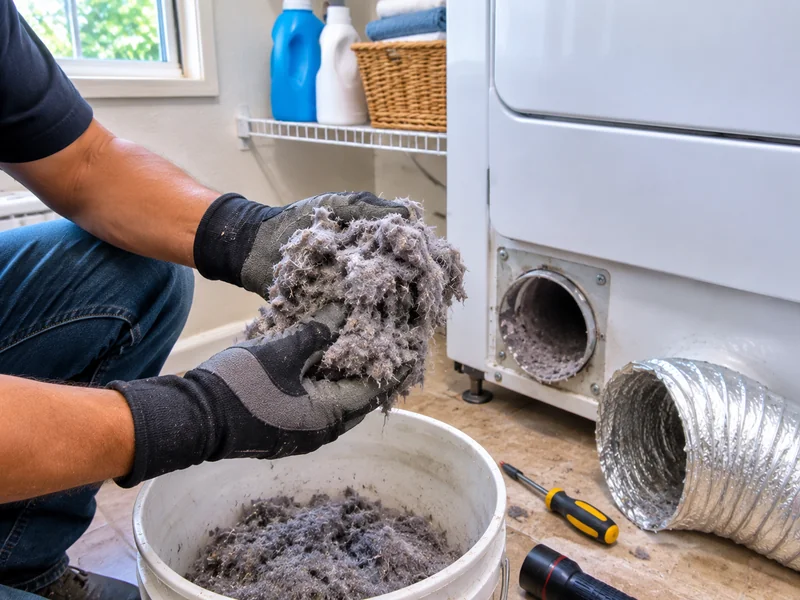
What Affects Dryer Vent Cleaning Cost on Kaua'i
On Kaua'i, a dryer works harder than it would on the mainland. Humid air slows drying, cycles run longer, and every load pushes more warm, wet air and lint through the vent. Coastal homes add salt air on the exterior hood, and an open vent cap is an easy nesting spot for birds. All of that shapes what goes into a job and what dryer vent cleaning cost looks like for your home.
The price of cleaning a dryer vent depends mostly on the vent itself. How long the run is, how many bends it has, where it exits (wall or roof), how easy it is to reach, and what is built up inside all change the amount of work. A short, straight vent that exits through a nearby wall is a lighter job. A long run that exits through the roof, with a nest or a crushed hose along the way, is a bigger one. The only reliable number is a quote based on your home's setup, which is how dryer vent cleaning on Kaua'i should be priced.
Below are the factors that matter, how to tell when your vent needs attention, and what to ask before you book.
1. How long the vent run is
The vent is the duct that carries hot, damp air from the back of the dryer to the outside of the house. In some homes that is a few feet straight through the wall behind the laundry area. In others it runs across a ceiling, through a closet, or up to the roof.
A longer run holds more lint and takes more time to clear end to end. It also gives lint more places to settle, so a long vent that has gone years without cleaning usually takes more work than a short one in the same condition.
2. How many turns it takes, and what it is made of
Every elbow in the duct is a spot where lint slows down and collects. A vent with several turns takes more effort to brush through than a straight one, and tight bends are where clogs tend to form first.
Material matters too. Smooth, rigid metal duct is the easiest to clean thoroughly. Flexible foil or plastic hose has ridges that trap lint, can sag or get crushed behind the dryer, and sometimes needs replacing rather than cleaning. If a damaged section has to be swapped out, that is added work beyond the cleaning itself.
3. Where the vent exits: wall, roof or crawlspace
Where the duct ends changes the job more than most people expect.
Wall exits at ground level are usually the most straightforward, because both ends of the vent are within easy reach.
Roof exits mean working at height and dealing with a longer vertical run, where lint can fall back down and pack in.
Crawlspace or under-floor runs can be tight to work in and harder to inspect.
4. How easy the dryer and vent are to reach
The dryer has to come away from the wall so the connection behind it can be cleaned and checked. That is simple in an open laundry room and slower in a tight closet, a stacked washer and dryer unit, or a condo where the vent runs through shared walls. In vacation rentals, the laundry area is sometimes tucked into a small space that was not built with service access in mind.
5. What is inside the vent
A vent with an even coating of lint is a routine cleaning. A vent with a solid lint plug, a bird nest, or debris that has blown in through a broken flap takes longer to clear and may need more than one approach.
On the outside, the vent hood takes a beating in island weather. Salt air can corrode metal hoods and hinges, and a flap that sticks open lets in pests, leaves and rain. A hood that no longer closes properly may need repair or replacement along with the cleaning.
6. How long since it was last cleaned, and how much the dryer runs
A household running a few loads a week builds up lint more slowly than a large family or a vacation rental turning over linens between every guest. Heavy use and long gaps between cleanings both mean more buildup, and more buildup means more work.
7. Whether anything needs fixing
Cleaning sometimes turns up problems: a disconnected joint inside a wall, a hose crushed behind the machine, a missing flap, or a section of duct that was never properly secured. Those are repairs, not cleaning, and a fair quote should list them separately so you can decide before any extra work starts.
How the factors add up
Factor | Usually a lighter job | Usually a bigger job |
|---|---|---|
Vent length | Short run through a nearby wall | Long run across ceilings or to the roof |
Turns | Straight or one bend | Several elbows or tight bends |
Duct material | Smooth rigid metal | Ridged foil or plastic hose, crushed sections |
Exit point | Ground-level wall | Roof or crawlspace |
Access | Open laundry room | Tight closet, stacked unit, shared walls |
What is inside | Light, even lint | Lint plug, nest, storm debris |
Exterior hood | Intact, flap closes | Corroded, stuck open, missing flap |
Use | Light household use | Large household or rental turnovers |
Repairs | None found | Disconnected joints, damaged duct |
Is professional cleaning worth it, or can you do it yourself?
This is the question homeowners raise most often online, usually alongside a worry about being upsold. It deserves a straight answer.
Some of the work is yours to do. Clean the lint filter on every load, and keep the area around the exterior hood clear. The U.S. Fire Administration recommends regular cleaning of lint from the trap, the vent and other parts of the dryer, and advises venting dryers directly outdoors as building codes require.
If your vent is a short, straight run through the wall and you can reach both ends, a brush kit from a hardware store can handle light buildup. Professional cleaning makes more sense when the run is long, exits through the roof, has several bends, or hasn't been touched in years, or when you suspect a nest or a blockage you can't see.
The way to avoid paying for work you don't need is to know what you are paying for. A trustworthy quote spells out which parts of the vent will be cleaned, and lists any repairs separately so you can approve them first.
Signs your dryer vent needs cleaning
Clothes take noticeably longer to dry than they used to
The dryer or laundry room feels unusually hot during a cycle
A burning or scorched smell when the dryer runs
Lint collecting around the outside vent hood
The exterior flap barely opens, or doesn't open, while the dryer is running
A damp or musty smell in the laundry area
You can't remember the vent ever being cleaned, or you moved in without knowing its history
That damp, musty smell matters on Kaua'i. A blocked vent pushes warm, wet air back into the laundry area instead of outside, and in a humid climate that moisture has few places to go. Keeping the vent clear is part of keeping moisture and mold down in a Hawaii home. If mold has already taken hold around the laundry area, that calls for mold remediation rather than a vent cleaning alone.
What to ask before you book
Will the whole vent be cleaned, from the back of the dryer to the exterior hood?
Will the dryer be moved, and reconnected properly afterward?
Is the transition hose behind the dryer checked, and what happens if it is damaged?
Is the exterior hood and flap inspected as part of the job?
If a repair is needed, will you quote it separately before doing it?
Is roof access included if the vent exits through the roof?
Can you show me the condition of the vent before and after?
Clear answers to these questions are a good sign. Vague ones are worth a follow-up.
Frequently asked questions
Is dryer vent cleaning worth it?
For most homes, yes. A clean vent lets the dryer push hot, damp air outside the way it was designed to, so loads dry properly and lint doesn't build up where it shouldn't. It matters even more in a humid climate like Kaua'i's, where dryers already run longer cycles.
How often should dryer vents get cleaned?
It depends on how much the dryer runs and how the vent is built. The U.S. Fire Administration recommends regular cleaning of lint from the trap and the vent. Homes with heavy laundry use, long vent runs or rentals with frequent turnovers need attention more often, and any of the warning signs above is a reason not to wait.
Can I clean my dryer ducts myself?
You can clean the lint filter on every load, and a short, straight vent that you can reach from both ends can often be brushed out with a hardware store kit. Long runs, roof exits, several bends, nests or damaged duct are better handled by a professional.
How do I know if my dryer vent is clogged?
Common signs are clothes taking longer to dry, a hot dryer or laundry room, a burning smell, lint around the outside hood, and an exterior flap that barely opens while the dryer is running.
Get a quote based on your home
Eco Kauai Services cleans dryer vents across Kaua'i, from Hanalei and Princeville to Kapaa, Lihue and Poipu, and uses a video inspection camera to show the buildup inside your vent. Because dryer vent cleaning cost comes down to your vent's length, route and condition, the most useful next step is a quote for your setup. Learn more about our dryer vent cleaning service, ask about pairing it with air duct cleaning, or request a quote.